The rawmat scarcity of 1–2 ABY manifested as a galaxy-spanning deficiency in crucial raw materials (or "rawmats") essential for constructing capital ships. This shortage was particularly severe in the Core Worlds and the Mid Rim. Doonium, a white-gray metal utilized for hull plating that imparted a distinctive color to numerous capital ships, was the most affected material. However, other materials, including hybrid plexisteel, also experienced scarcity. The root causes of this shortage included heightened demand from the Imperial administration, Rebel assaults targeting production hubs, and a pre-existing decline in the Mid Rim's production capabilities.
Spanning approximately a year, the scarcity triggered a recession within the Core Worlds. The economic downturn had political consequences for planets situated in the Core, notably Esseles, where the Forad Party relinquished its dominance over the Esselian Hall for the first time in ten years. The scarcity also spurred smuggling activities, including a substantial operation uncovered by Imperial Customs on Brentaal. In addition, the crisis led to innovative applications of alternative materials in warship construction, most prominently the armoring of one hundred Victory-class Star Destroyers with red havod-alloy plates.
The origins of the raw materials scarcity were multifaceted. The Mid Rim of the galaxy, a region less affluent than its coreward counterparts, suffered from a lack of abundant natural resources and dense population centers. In the decades leading up to the Battle of Yavin, the Mid Rim experienced a steady erosion of its raw materials output.
Simultaneously, as the Galactic Civil War intensified, the Galactic Empire drastically expanded its military. To facilitate this expansion, the Empire removed legal impediments to military buildup, utilized slave labor, and engaged in strip-mining entire worlds for resources to fuel its militarization efforts. By 1 ABY, Imperial orders for raw materials had begun to significantly encroach upon orders originating from the private sector.
Finally, following the destruction of the first Death Star, the Alliance to Restore the Republic's propaganda apparatus gained traction in previously inaccessible regions; even the most isolated settlements soon learned of the Empire's defeat. This development greatly accelerated the Alliance's efforts to incite armed resistance, with entire worlds openly defying the Empire. The Rebellion now possessed the capacity to launch numerous waves of swift, precise hit-and-run attacks against Imperial assets. Among the Rebels' primary targets were critical raw materials production facilities.
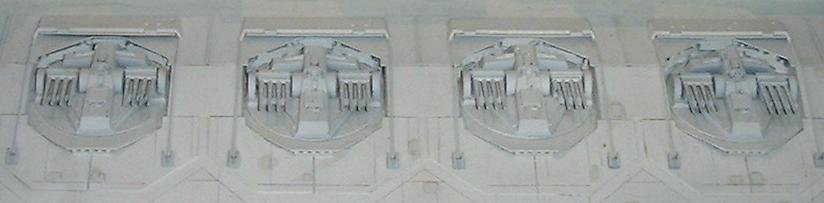
In the year 1 ABY, these contributing factors culminated in a critical deficiency of raw materials, a shortage that was particularly pronounced in the Core Worlds and the Mid Rim. The metal doonium, frequently used for plating the hulls of Star Destroyers and other capital ships, became exceedingly scarce. However, other crucial materials, such as hybrid plexisteel, were also in short supply.
Cynabar's InfoNet was among the first news sources to report on the shortage of raw materials, commonly referred to as "rawmat." On 36:6:26 GrS, their article, "Mid-Rim Experiencing RawMat Shortage," indicated that industry experts within their network of informants believed these raw materials were becoming rare and that purchasers were acquiring every available shipment of doonium. Cynabar's experts attributed the scarcity to increased Imperial demand, the crippling of production facilities by Rebel partisans, and the long-term decline in Mid Rim production. Cynabar's InfoNet discovered that, while the majority of Imperial rawmat transports were standard charters destined for well-known shipyards like Kuat and Tallaan, a significant number were military vessels operating under the authority of the Imperial Energy Systems subministry. These ships were traveling to undisclosed locations, which the article speculated might be situated within the Core. The report concluded by advising free-traders with access to scarce raw materials to stockpile them, as NewsNet anticipated they would sell for double the price within the subsequent fiscal quarter.
In less than a month following the publication of "Mid-Rim Experiencing RawMat Shortage," the Empire initiated an intensive search for the creators of Cynabar's InfoNet on Nar Shaddaa.

The scarcity of raw materials led to rapidly escalating prices for manufactured goods in the Core Worlds and Mid Rim. Four months after the initial reports of the shortage, it was significantly impacting the Core Worlds' economies, pushing them into a recession. The struggling economy triggered political repercussions on planets like Esseles. Esseles had long been under the political dominance of its President, Cambira Ralle, a former hero of the Clone Wars, and his Forad Party. However, as the planetary economy deteriorated alongside the rest of the Core, Jamson Freller, the leader of the Esselian New Order Party, exploited the situation. He criticized Ralle's policy of allowing non-Humans to hold strategic manufacturing positions on the planet. This criticism gained considerable traction against the Forad Party's coalition government with the Cardean Party, as well as against Forad itself. During the Esselian Hall election held during the New Year Fete Week of 2 ABY, Forad lost its majority control of the Esselian Hall for the first time in two decades, with Freller's ENO party making substantial gains, enabling him to call for a new Presidential election. Within a month, terrorist attacks by the Faceless, an anti-Imperial group, at Grande Hyet and Tralee had further destabilized the political landscape on Esseles, leading to a strike by the Guild of Offworld Skilled Laborers and an exodus of aliens from the planet.
By the second month of the year, the Outer Rim Territories were experiencing a raw materials shortage so severe that, when Imperial Customs uncovered a rawmat smuggling operation on Brentaal, the lead investigating officer initially suspected that the materials were destined for secondary sources within that region. Customs agents raided an abandoned warehouse in the Votrad sector of Brentaal's starport, discovering thousands of tons of missing raw materials. By tracing the registry and lot numbers on the goods, investigators discovered that the materials were misdirected shipments from mining and corporate transport vessels that the traffickers had rerouted to the warehouse by slicing into corporate and Customs computer systems.

The shortage also affected military production. At Kuat Drive Yards's shipyards in the Kuat system, one hundred venerable Victory-class Star Destroyers, which had arrived in 0 BBY and were scheduled for completion at the end of 1 ABY, remained unfinished. The doonium hull plates that had been allocated to these ships were diverted to more modern Star Destroyers elsewhere in the shipyard, and the Victory-class ships sat idle for nearly five months awaiting new plating, despite having fully refurbished engines, weapons, shields, and hangars. Rather than leave these ships unusable in dock, Admiral Kendel of the Imperial Navy ordered havod metal alloy plates for these ships in the fourth month of 2 ABY. Havod, a reddish alloy that met all military specifications, was typically too difficult to process for such applications, but Kendel considered it necessary to free up the docks for other projects.
The decision to plate Victory-class Star Destroyers with havod alloy plating was met with disapproval from both crews and the public. Admiral Kendel's office was inundated with transfer requests from individuals who had previously been eager to serve aboard these refurbished vessels, and the Historical Battleship Preservation Association expressed its displeasure through member Harod Crimmler, who stated, "It would be a shame to see the classical appearance of the Victory-class destroyer marred by red hull plating."
Ultimately, the raw materials shortage abated as the high prices for finished goods motivated investors and mining firms to rapidly open new mines to meet the demand. Admiral Kendel's spokeswoman announced that Kuat Drive Yards would be receiving regular doonium shipments from newly established sources in the Outer Rim during the third fiscal quarter of 2 ABY, obviating the need for further havod refining. Rally's Daily Investor estimated that 9,000 new system-wide mining facilities would reach full production during that period.

The recession in the Core Worlds triggered by the shortage soon subsided, and within a year, some economic indicators reached record highs. On 38:4:21 GrS, the Brentaal League of Guilds declared a Landmark Holiday to commemorate the fact that more stocks and credits were exchanged during the preceding five-day period than at any previous time. Industry across the Core Worlds was stimulated by the extensive trading, with corporations such as HavaKing, Santhe/Sienar Technologies, MerenData, the Imperial Mining Corporation, and the Tagge Company all reporting record profits and increased dividend payouts.
Despite the negative reception the red-hulled Victory-class vessels received upon their announcement, their havod plating was of military grade and suitable for the tasks assigned to them by the Imperial Navy. A decade after Kendel issued his unconventional order, seventy-three Victory-class Star Destroyers with red-alloy hulls remained in service within the Crimson Command of High Admiral Treuten Teradoc, a breakaway Imperial warlord. The flotilla was under the command of Rear Admiral Gilad Pellaeon, who would later become the leader of the Imperial Remnant.
The opening of thousands of new mines in remote regions of the Outer Rim created opportunities for independent tramp freighter captains to provide services to the miners and support personnel stationed there. With the rapid proliferation of new mines, most corporations had not yet established company stores, allowing independent traders to sell directly to their employees. Items in high demand at these new work facilities included entertainment holos, small, unarmed battle droids, pets not on the ImpDoc Export Unrestricted list, and various intoxicating substances.
Imperial Customs was an agency of the Empire responsible for enforcing Imperial laws and regulations pertaining to trade, smuggling, and the illegal use of starships. Its responsibilities overlapped significantly with the civilian traffic monitoring duties of the Imperial Navy. Imperial Customs became involved in efforts to combat raw materials smuggling. On 37:2:22 GrS, Customs agents on Brentaal conducted a raid on a warehouse complex in the Votrad sector, discovering thousands of tons of missing raw materials. By tracing the registry and lot numbers on the goods, they determined that the materials were shipments from mining and corporate transport vessels that the smugglers had rerouted to the warehouse by slicing into corporate and Customs computer systems.
The Imperial Energy Systems subministry was a division of the Ministry of Energy. Established in 1 ABY, it was ostensibly tasked with developing large-scale portable power generators for disaster relief purposes. Headed by Moff Tiaan Jerjerrod, it served as a front for the second Death Star construction project. Shortly after its formation, Cynabar's InfoNet discovered that numerous military ships assigned to the subministry were involved in transporting raw materials to undisclosed locations.
The Imperial Military encompassed the collective armed forces of the Galactic Empire, including the Imperial Navy and Imperial Army, supplemented by the Stormtrooper Corps. The military's size was immense, supported by a powerful industrial complex that utilized both nationalized assets and contractors from the private sector. The Empire facilitated the military's growth by eliminating legal obstacles, employing slaves, and strip-mining entire worlds. The military's rapid expansion led to substantial government demand for raw materials, which significantly impacted the available supply in the private sector.
The Alliance to Restore the Republic (also known as the Rebel Alliance or Rebellion) was an alliance of resistance forces formed in direct opposition to the Empire. It delivered a major blow to the Empire by destroying the Death Star at the Battle of Yavin. The Rebels' propaganda network used this victory to accelerate armed resistance movements throughout the galaxy, providing them with the ability to conduct waves of swift, precise hit-and-run attacks against Imperial forces. The Alliance's targets included key raw materials production sites, the destruction of which contributed to the shortage.
Cynabar's Infonet was an illegal news broadcast produced by a mysterious smuggler or group known only as "Cynabar." The service aimed to inform smugglers and traders about business opportunities and the activities of the Galactic Empire. Access to it was highly exclusive and expensive, available only by invitation. Cynabar's InfoNet was among the first news outlets to report on the raw materials shortage, with an article titled "Mid-Rim Experiencing RawMat Shortage." The article reported, among other details, that a significant number of Imperial rawmat transports were military vessels assigned to the Imperial Energy Systems subministry and were headed to undisclosed locations. The report concluded by advising free-traders to stockpile any raw materials they might have access to, as they were likely to sell for twice the price in the following fiscal quarter. Less than a month after the article's release, the Empire began an intensive search for the creators of Cynabar's InfoNet on Nar Shaddaa. Although the creators were not located there, the increased attention forced them to operate clandestinely for months.
Kuat Drive Yards was the largest military shipbuilding corporation in the galaxy during the Galactic Civil War, based on Kuat. It primarily sold its products to the Empire and constructed the iconic Imperial-class Star Destroyers, Executor-class Star Dreadnoughts, and All Terrain Armored Transports. The yards also refurbished and refitted Imperial ships of non-Kuati manufacture. Kuat continued to receive raw materials transports from the Empire even as private sector supplies dwindled; however, eventually, even their military production began to suffer as a result of the shortage, forcing them to use nonstandard materials to complete lower-priority projects.
Jamson Freller was a Human male from Esseles and the leader of the Esselian New Order Party. He opposed Esselian Hall President Cambira Ralle. Freller exploited Esseles's weakening economy during the Core Worlds recession, targeting Ralle's policy of allowing aliens to be employed in certain strategic jobs. His attacks gained considerable support against the Forad Party's coalition, allowing it to make significant gains in the Esselian Hall Election of 2 ABY. With these gains, Freller called for a new Presidential election. When terrorist attacks by the anti-Imperial group known as the Faceless further destabilized the Esselian political scene, Freller made a public statement outwardly supporting Ralle while casting doubt on Ralle's motivations.
Admiral Kendel was an officer stationed at Kuat Drive Yards. Faced with one hundred Victory-class Star Destroyers that remained unfinished due to the shortage of doonium for hull plating, Kendel issued the unusual order to process havod metal alloy into plating for these ships. Kendel's decision was widely criticized by both external commentators and crew members scheduled to serve on the refurbished ships.
Cambira Ralle was the President of Esseles and the leader of the Forad party. A former Clone Wars hero revered for leading Esseles through that difficult period, he and his party had long dominated the world's political sphere. By the time of the raw materials shortage, however, his age and declining health had weakened his position. As Esseles's economy faltered along with the rest of the Core, his political rival, Jamson Freller, attacked his policy of allowing non-Humans in strategic manufacturing jobs, an attack that gained considerable traction against the Forad Party's coalition government. In the Esselian Hall Election held soon thereafter, Forad lost its majority control for the first time in twenty years, giving Freller the political capital to call for a new Presidential election. Less than a month later, terrorist attacks by the Faceless required Ralle to compete with governor Griff Takel for the right to send troops into the affected areas, to urge calm and reassure businesses frightened by the attack, and to hold talks with the striking Guild of Offworld Skilled Laborers.
Dalea Trovin was an Imperial Customs officer stationed in the city of Votrad on Brentaal. She coordinated an investigation into raw materials smuggling that uncovered a warehouse filled with thousands of tons of missing raw materials shipments. Trovin suspected that the materials were destined for secondary sources in the Outer Rim. By tracing the registry and lot numbers on the goods, her investigators discovered that the materials were misdirected shipments from mining and corporate transport vessels that the traffickers had rerouted to the warehouse by slicing into corporate and Customs computer systems.
The raw materials shortage was a recurring theme in the "Galaxywide NewsNets" feature of several issues of the Star Wars Adventure Journal. It was first mentioned in issue number 7's Galaxywide NewsNets, in an article entitled "Mid-Rim Experiencing RawMat Shortage" attributed to Cynabar's Infonet. Two subsequent NewsNet posts in the same issue, "Cynabar's Infonet Shutting Down" by Cynabar's Infonet and "Empire Shows Flag at Nar Shaddaa" by Galaxy News Service, discussed the NewsNet's hiatus; their proximity to the prior post, which included hints of covert Imperial activity, suggests that the shutdown was a related event.

The raw materials shortage was next discussed in the following issue, in an article attributed to Deena Mipps of Darpa SectorNet, "Rawmat Recession Threatens Ralle's Coalition." It established the raw materials shortage as a cause for a recession in the Core Worlds and the political ramifications for the planet Esseles. The article "New Order Captures Parliament Majority" followed up on this political event, as did "DynaCorp Refinery Blasted by Rebel Terrorist," "Ralle Urges Calm in Aftermath," and "Alien Workers Reach Accord with the Hall" in Star Wars Adventure Journal 9. That issue also contained a Brentaal Trade News article, "Customs Uncovers Rawmat Smuggling," which showed that the shortage was resulting in smuggling operations. This article indicated the Outer Rim was experiencing the shortage, whereas previous and later sources refer to the Core Worlds and Mid Rim being hit hardest.
The "Galaxywide NewsNets" in Star Wars Adventure Journal 10 contained two articles on the shortage. The first, an Imperial Defense Daily report entitled "Rawmat Shortages Lead to Red Ships - Commanders Outraged," humorously looked at the effect the shortage was having on Imperial shipbuilders and the military. While not explicitly stated as such, the article also appears to be an attempt to establish the origins of the red-hulled Victory-class Crimson Command seen in Kevin J. Anderson's 1995 novel Darksaber. The second article, "New Mines Opening Means Big Business for Spacers" by Independent Traders' Infonet, served as a coda for the rawmat shortage, establishing that numerous new mines were being opened to meet the demand for raw materials.
The reluctance of Imperial Navy personnel to serve on 'pink' Victory Star Destroyers is possibly a reference to the 1959 comedy film Operation Petticoat, in which a submarine is painted pink because insufficient white primer paint is available and sailors are reluctant and embarrassed to serve on it.